
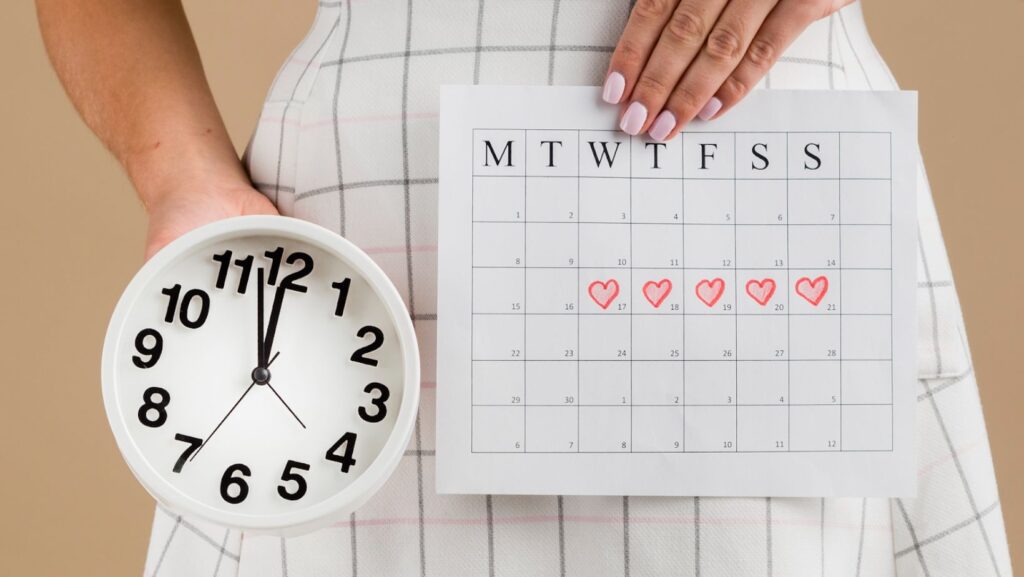
A lot of people believe that the term “menstrual cycle” only refers to the days when a woman has her period. In reality, the menstrual cycle is a complex series of changes that the female body goes through every month. It has four critical phases that prepare your body for a pregnancy.
The length of a menstrual cycle can vary from person to person, but it commonly lasts around 28 to 30 days.
If you feel like going through a rollercoaster of emotions every month, you’re not alone. Each phase has a distinct impact on your physical health, energy levels, and mood. Let’s break down the four phases of the menstrual cycle and everything you need to know:
Phase 1: Menstruation
During each menstrual cycle, an egg develops and is released from the ovaries. As a result, the lining of your uterus thickens with blood and nutrients to prepare for a potential pregnancy. But if a pregnancy doesn’t take place, both estrogen and progesterone levels drop.
Without the hormones to sustain it, the thickened uterine lining breaks down and sheds, resulting in a period. The menstrual blood flow, therefore, is a combination of blood, mucus, and tissue from the uterus. The following symptoms are common during the menstrual cycle:
- Tender breasts
- Bloating
- Cramps
- Lower back pain
- Headaches
- Mood changes, such as irritability
- Tiredness
On average, a woman loses between 30 – 40 mL of blood, while heavier periods result in the loss of approximately 80 mL of blood.
Numerous factors impact the length and frequency of your menstrual cycle. Consequently, women with a shorter menstrual cycle might also get two periods in one month. But if you start getting frequent double periods, it could be a sign of hormonal shifts or thyroid changes.
Phase 2: Follicular Phase
This is the longest phase of the menstrual cycle. It begins on the first day of your period (there is some overlap) and lasts for the next 14 to 21 days or until ovulation happens.
During this phase, the brain produces follicle-stimulating hormone (FSH). This hormone signals your ovaries to produce 5 to 20 small sacs called follicles. Only one follicle eventually matures into a dominant follicle and releases more estrogen.
At last, those rising estrogen levels trigger your pituitary gland to release luteinizing hormone (LH). This is when ovulation starts.
Phase 3: Ovulation
During this phase, your ovaries release a mature egg (it lasts about 12 – 24 hours). The egg travels down the fallopian tube toward the uterus to be fertilized by sperm. This is why many couples try to conceive during the ovulation phase.
You also experience symptoms like:
- A slight rise in basal body temperature
- A thicker discharge (resembling egg whites)
- Increased libido
Ovulation happens right in the middle of your menstrual cycle. For instance, if you have a cycle of 24 days, ovulation occurs on day 14.
Phase 4: Luteal Phase
The luteal phase begins after ovulation and lasts until the first day of your period. A special structure or cyst called the corpus luteum is formed in the ovary. The corpus luteum releases hormones, mainly progesterone and some estrogen. The main purpose is to prepare the uterus to grow a fetus.
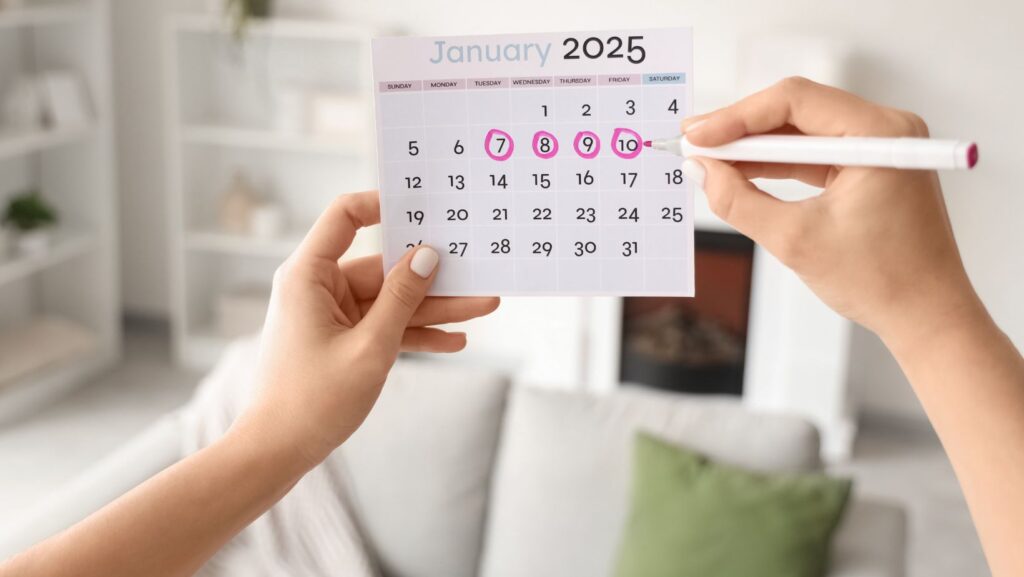
But if you don’t get pregnant, the corpus luteum sheds on its own and gets absorbed. This is why you experience premenstrual syndrome (PMS) during the luteal phase. Common examples include:
- bloating
- Breast swelling
- Weight gain
- Headaches
- Mood changes
- Trouble sleeping
- Food cravings
If you experience severe symptoms, find an OBGYN for your needs.